For an inventor deciding where to develop a product, the Midwest offers a specific and underrated combination: moderate operating costs, short shipping distances to real factories, and an engineering workforce that came up inside working plants. It is not the cheapest place on earth to make something. It is one of the more practical, because the people who can build your product are close enough to talk to.
Cost without the coastal premium
Office space, engineering labor, and prototyping in states like Minnesota, Wisconsin, and Iowa generally cost less than in coastal tech hubs, while the talent pool remains deep. The Small Business Administration, which studies the economics of small manufacturers at sba.gov, has repeatedly pointed to regional cost differences as a real factor in where small product firms can survive their first years. A dollar of development budget simply covers more work here.
Lead time is the quiet advantage
The more decisive factor is time. When a prototype shop is a two-hour drive rather than an ocean away, a design flaw found on Monday can be corrected and remade by Friday. Overseas sourcing can lower a unit price, but it lengthens the feedback loop that early product development depends on. For the messy first iterations, when a design changes every week, proximity beats price. Inventors who ship prototype work overseas too early often spend the savings on shipping, delay, and miscommunication.
Real factories, not just ideas about them
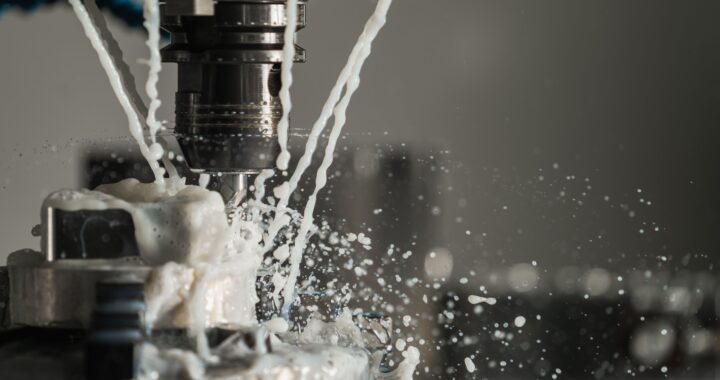
The Midwest kept its manufacturing base through decades when other regions lost theirs. That means injection molders, metal fabricators, contract assemblers, and tool-and-die shops still operate here at scale, and many take work from independent inventors. The United States Patent and Trademark Office publishes patent activity by state at uspto.gov, and the industrial Midwest consistently produces a strong share of utility patents relative to population, which tracks with a workforce that solves physical problems for a living.
The digital-first workflow that fits the region
The modern version of the Midwest advantage pairs local factories with digital design. An inventor no longer needs to hand-build a model to test an idea. A CAD model and photorealistic renderings settle most design questions on screen, and a physical build follows only when a project truly needs one. That keeps the expensive steps, tooling and production, for the end.
Enhance Innovations, a firm in Champlin, Minnesota, founded in 2010, is built around that sequence. It produces industrial design, CAD and engineering, renderings, and licensing representation together, then coordinates manufacturing sourcing when a design is ready. Keeping those functions integrated, rather than scattered across separate freelancers, cuts the coordination cost that quietly drains an inventor’s budget.
How the math actually plays out
Consider the development phase in concrete terms. An inventor refining a product might go through several design revisions before the shape and function are right. Each revision is a chance to catch a problem. If each round of feedback takes a week with a nearby shop, the design converges in a couple of months. If each round takes a month because parts cross an ocean and time zones, the same convergence stretches past half a year, and every extra week carries cost and lost momentum. Speed compounds.
The Midwest also offers something harder to quantify: accountability. A supplier forty minutes away, whose reputation depends on local relationships, tends to answer the phone and stand behind the work. That does not mean distant vendors are unreliable, only that early development, when communication matters most, is easier to manage across a short distance. Match the phase to the place, and the region’s strengths line up with an inventor’s real needs.
Where the advantage does not apply
Honesty matters here. For very high-volume consumer goods with razor-thin margins, overseas production may still win on unit cost once a design is final and stable. The Midwest advantage is strongest in the development phase and in moderate production runs, where speed, communication, and quality control outweigh a few cents per unit. An inventor should match the sourcing decision to the product, not to a slogan.
The practical takeaway
Develop close to home, source production where the numbers make sense. For most independent inventors, that means using the Midwest’s engineers, prototype shops, and design firms to get a product right, then deciding on manufacturing location once the design is locked. The region’s real contribution is not a low sticker price. It is the short, fast, correctable path from idea to a product that actually works.
Educational content only, not legal or financial advice. Confirm current costs and capabilities with vendors and do your own research before committing funds.